The Industrial Accelerator Act, which the European Commission is set to unveil, is poised to be a landmark in EU industrial policy in early 2026. The current debate on the principle that should guide European public procurement seems to pit "Made in Europe" against "Made with Europe." Our latest publications and an imminent panel discussion at the Munich Security Conference address this very contrast, seeking to answer the following question: How can European industrial policy prioritize technological sovereignty while avoiding the distorting effects of protectionist measures? Openness – in innovation as well as in trade – is key.
In this year's first newsletter, you will also learn more about inheritance taxation, alternative labor market statistics, and the impact of patience and institutions on lifelong learning. We will also examine the new US National Security Strategy and its meaning for Europe. Enjoy the read!
|
|
|
|
|
EconPol Forum 01/2026: Paving The Way for Tech Disruption – How to Rethink EU Industrial Policy
The green transition, the race for artificial intelligence, and geostrategic concerns have sparked an increase in government intervention in the economy, with instruments ranging from substantial public subsidies to state-guaranteed loans. This shift marks a new era in industrial policy. Against this backdrop, Europe's pursuit of technological and digital sovereignty has become a strategic imperative.
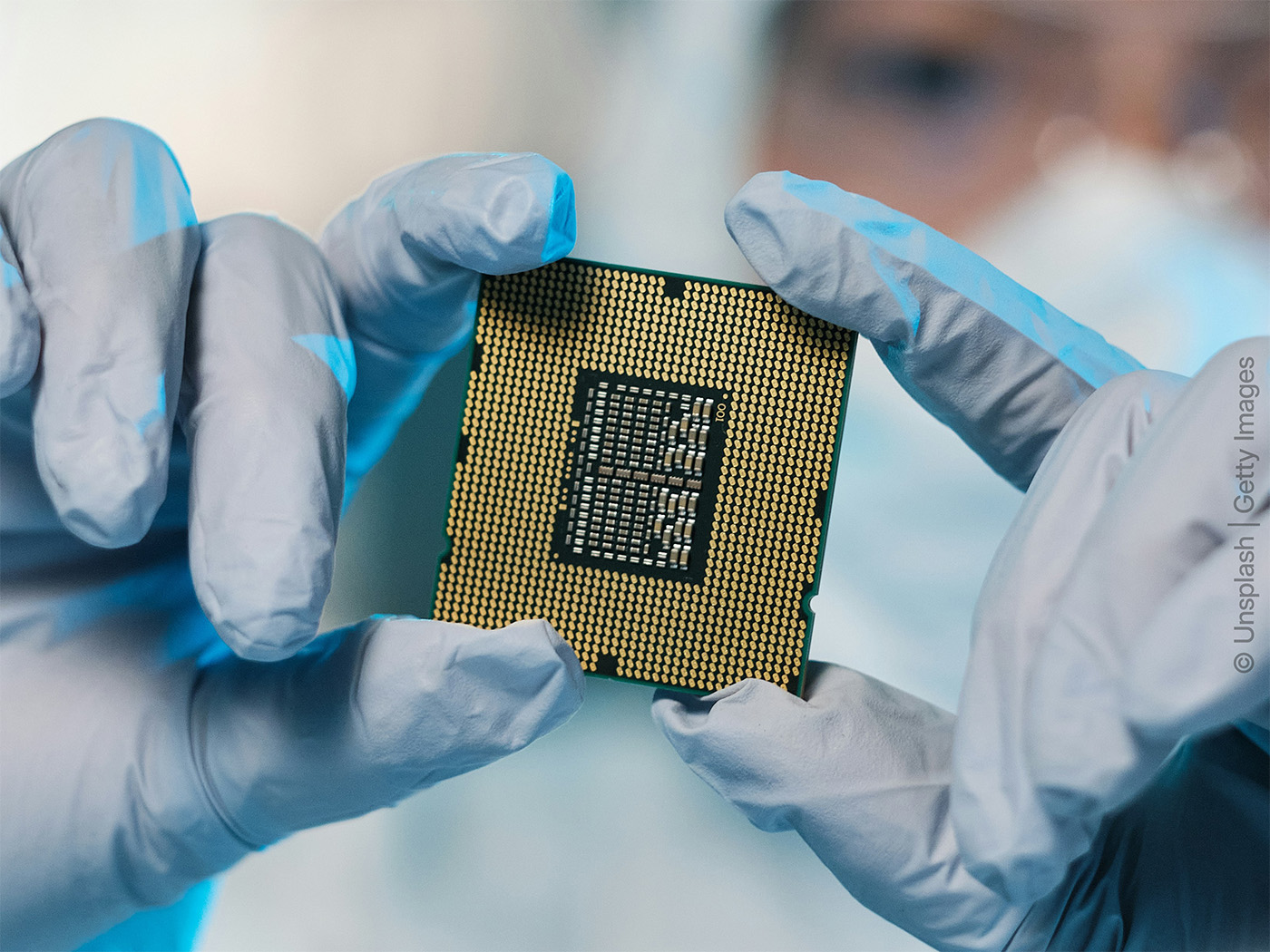
To succeed, the EU needs coordinated policymaking with clear objectives and rigorous market evaluations. The semiconductor sector offers a crucial lesson. While the EU Chips Act focused on legacy chip production, Europe’s true comparative advantage lies in designing and manufacturing machinery for chip production. To secure a competitive edge, the EU must prioritize supporting this sector while expanding access to global R&D hubs. This requires a strategy of diversifying partnerships, particularly with Asian economies, balancing autonomy with vital global collaboration.
|
|
|
|
|
Big Data-Based Economic Insights
Beyond Surveys: How Alternative Data Can Measure the Health of the Labor Market
Public statistics are typically the primary source of labor market data. However, public data may reflect distortions arising from the surveys conducted, or – a scenario that is no longer negligible – be subject to political pressure. As Revelio Labs researchers show in this article, the private sector can provide a reliable alternative based on profiles and job postings from public portals, enabling policymakers, investors, and the public to validate public data and make better-informed decisions.
|
|
|
|
|
What Does the New US National Security Strategy Mean for Europe?
The US National Security Strategy, published in December 2025, contains passages on freedom of expression and democratic institutions which EU institutions and governments have considered to be interference in their internal affairs. However, as Clemens Fuest points out, the document contains important economic and political statements that deserve discussion. One above all: Europe's economic weight in the global economy has declined dramatically since 1990. To regain ground, Fuest says, we need more EU, not less. In this respect, however, the document suggests exactly the opposite.
|
|
|
|
|
|
ifo / EconPol Breakfast Discussion at the Munich Security Conference: “Paving the Way for Tech Disruption – How to Rethink Industrial Policy”
fancyrosi studio, Munich | 13 February 2026 09:30 – 11:30 CET
It's almost time! Our official side event at the Munich Security Conference kicks off very soon. The debate will center on a European industrial policy that prioritizes innovation, strategic autonomy, and prosperity. We look forward to welcoming a panel of top-level speakers and engaging in a discussion with policymakers, established industry leaders, startups, and academics.
Panel speakers include Svenja Falk (Accenture Research), Clemens Fuest (ifo Institute), Daniel Gros (Institute for European Policymaking at Bocconi University), and Fiona Murray (MIT Sloan & NATO Innovation Fund). Oliver Falck (ifo Institute & LMU) will introduce the discussion and Maithreyi Seetharaman will moderate the debate.
Be sure to check out our social media channels and website for insights and photos from the event. Recordings will be available in the coming days.
|
|
|
|
|
|
Policy Brief 80: The Effectiveness of EU Export Bans on Military Goods
Why did Western technological components continue to fuel the Russian war machine for so long, despite unprecedented bans? One answer is that the EU did not fully tighten restrictions on the export of military-relevant goods until January 2024. However, that is only one side of the story. A new EconPol Policy Brief coming out in the next few weeks quantifies the amount of goods that reached Russia through indirect exports via third countries, primarily Turkey, China, Hong Kong, and the UAE. Imposing secondary sanctions on these key hubs at the beginning of 2024 has proven effective in curbing the substantial flow of indirect exports to Russia.
|
|
|
|
|
Policy Report: The Global Europe 2.0 – The Economic Importance of New Trade Agreements for the EU
The critical importance of well-designed, objective-oriented trade measures for Europe is also addressed in a new Policy Report to be published at the end of February. The central question here is: What is the economic potential of expanding the EU's network of free trade agreements (FTAs) – such as the recently signed deals with India and the Mercosur countries? The study finds that the EU's GDP would grow significantly thanks to the increase in exports generated by FTAs, with gains concentrated in manufacturing and negligible effects in services and agriculture. Indeed, the varying sectoral impact of the agreements is crucial to understanding the EU's political struggle in adopting them, a topic that will be analyzed in depth in the report..
|
|
|
|
|
If you wish to subscribe to our EconPol Forum Email Alert, please click here.
We hope you enjoyed reading this latest edition of our EconPol newsletter. We’ll be back in December with our next issue.
Subscribe to our publication alert to be informed about the latest releases.
|
|
|
|
|
Privacy Policy and Data Protection
We place great importance on your privacy and would like to inform you of our up-dated privacy policy. We treat your information confidentially in accordance with the General Data Protection Regulation (GDPR).
In order to provide you with more transparent and clear information on how we pro-cess your personal information, we have divided our privacy policy into various chapters. In this description you will find the basis on which the data is stored and how we use the data. Here, you can also find out more about your rights, such as how to access your information and how to restrict the use of your information. Our privacy policy can be found on our website.
Subscribe | Unsubscribe | Feedback | Imprint | Privacy Policy
|
|
|
Provider
EconPol Europe – CESifo GmbH
Poschingerstr. 5
81679 Munich, Germany
Registered with the Munich District Court (Amtsgericht München) under HRB 125257
Managing Director
Prof. Dr. Dr. h.c. Clemens Fuest
VAT ID: DE218182755
Editor and Program Director EconPol Europe
Andrea Balestracci
Email: newsletter@econpol.eu
The reprint of excerpts from this alert is permitted only with written permission and provided that the source is acknowledged.
© 2026 EconPol Europe – CESifo GmbH
|
|
|
|
|
|